How to Set Up Alerts in TradingView
Set up TradingView alerts for Statistical Mapping° and Statistical Volatility°: which events trigger them, which condition to pick and how to manage them.
When you set up an alert in TradingView, the settings of the indicator on your chart at the moment you create the alert will directly influence how the alert behaves going forward.
Make sure to customize the indicator’s settings according to your personal preferences, and ensure your chart is set to the correct timeframe and TradingView ticker where you want the alerts to trigger.
Which alerts StatMap° and StatVol° offer
Statistical Mapping° alerts are automatic. Once you create an alert on the indicator, it fires when price reaches an enabled Distribution or Manipulation level and when a liquidity level is swept. There is no alert on the Open. Each level alert fires once per period, so a 1D level alerts at most once per day. To get fewer alerts, disable the level styles you do not trade in the indicator settings.
Statistical Volatility° alerts are configurable in the indicator settings. Choose any combination of Creation (a new displacement appears), First Touch (price first touches the displacement boundary) and Midpoint Touch (price touches the 50% line of the displacement). Creation and First Touch are on by default, Midpoint Touch is off. Each fires once per displacement.
Message examples and more detail are in StatMap° v4 alerts: what you can alert on.
Setting Up an Indicator Alert
Locate the Indicator:
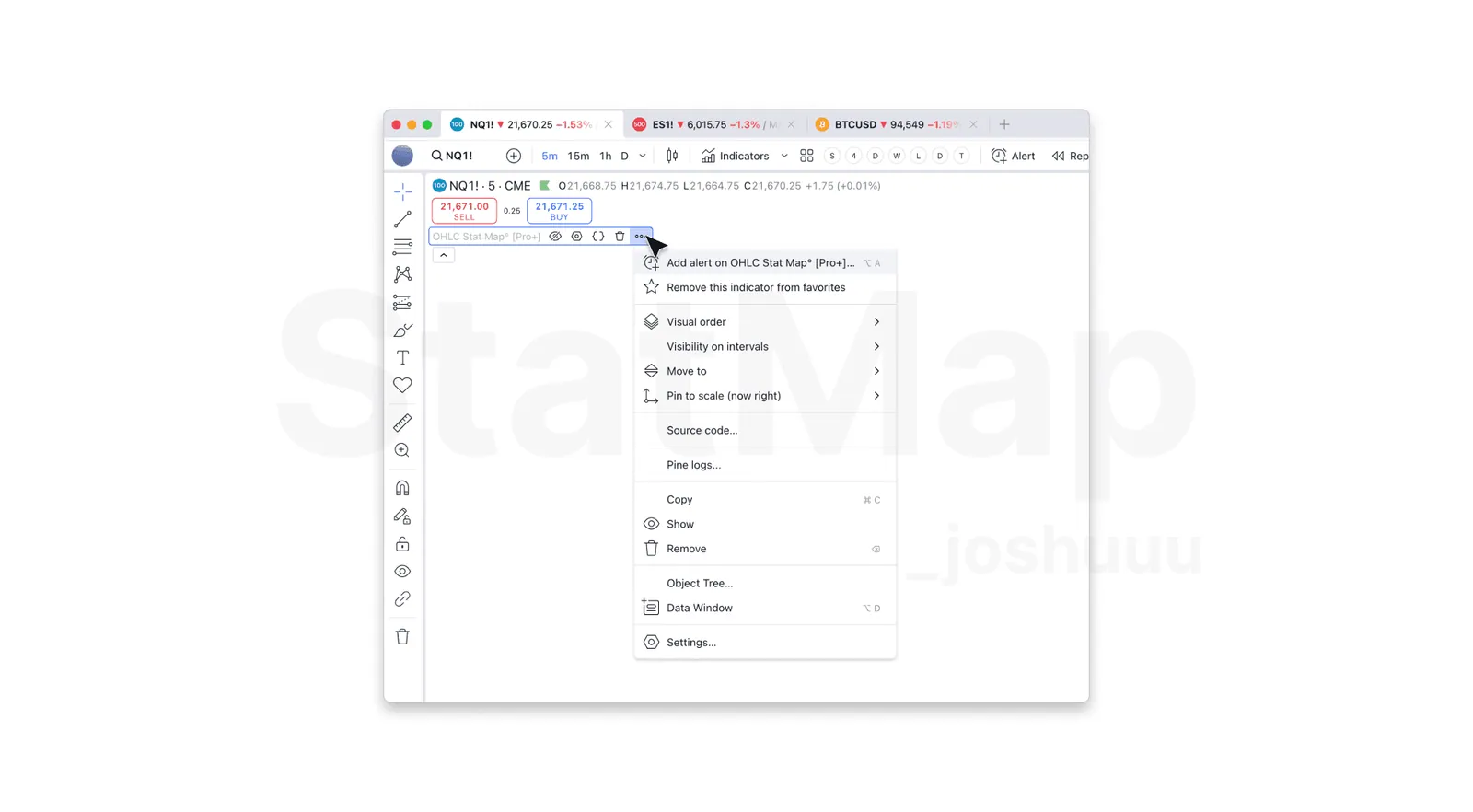
Find the indicator name at the top-left of your TradingView chart.
Access Alert Options:
Click on the three dots next to the indicator name.
Set Up the Alert:
Select “Add alert on [indicator name]” from the dropdown menu.
Pick the condition:
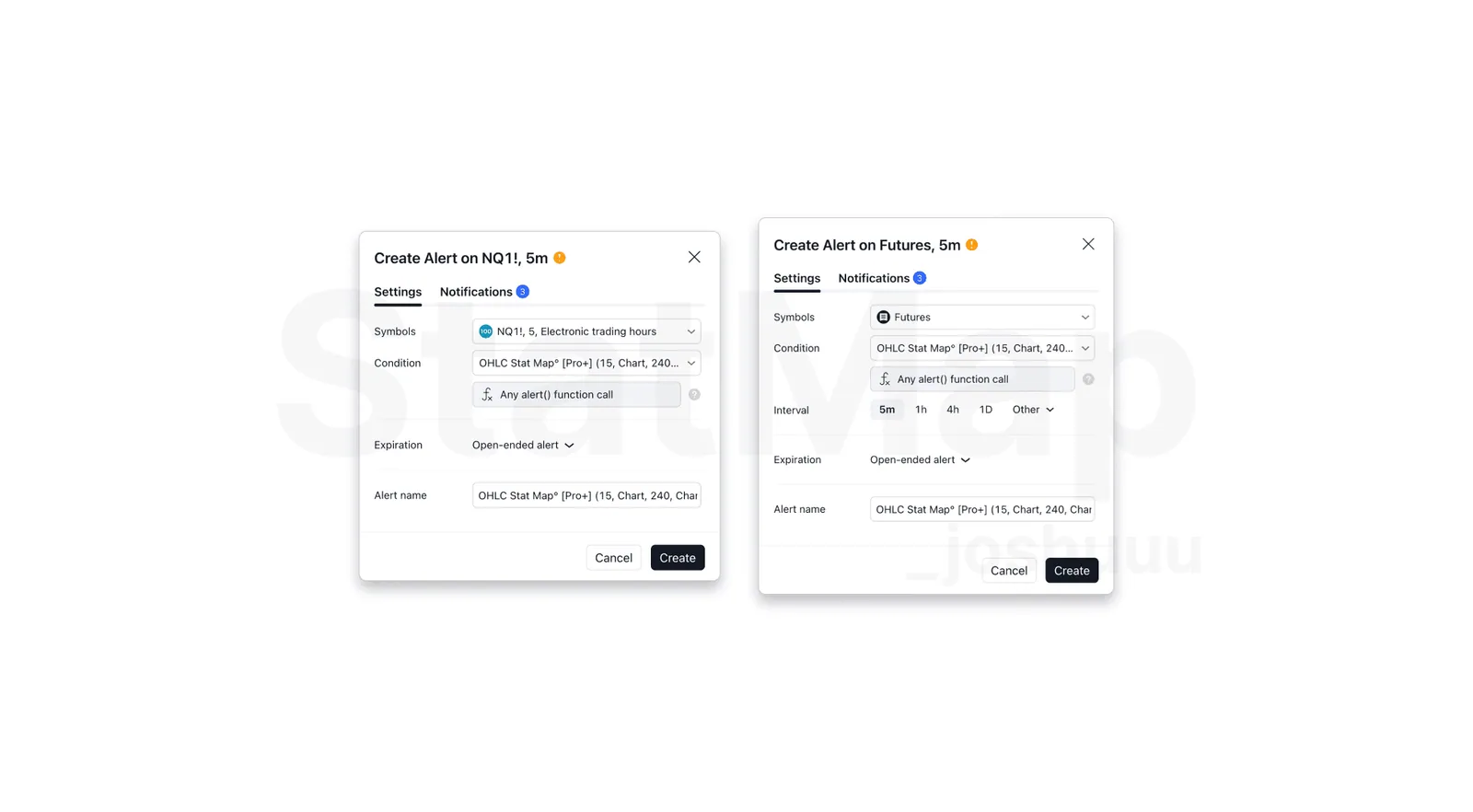
For Statistical Mapping° and Statistical Volatility°, choose “Any alert() function call” as the condition. This covers every alert the indicator sends with your current settings.
Alert Settings
In this step, you can choose an Alert Name and an Expiration Date.
If you are subscribed to TradingView Premium, you can select a Watchlist item directly from the ticker dropdown when setting up alerts.
Notification Types
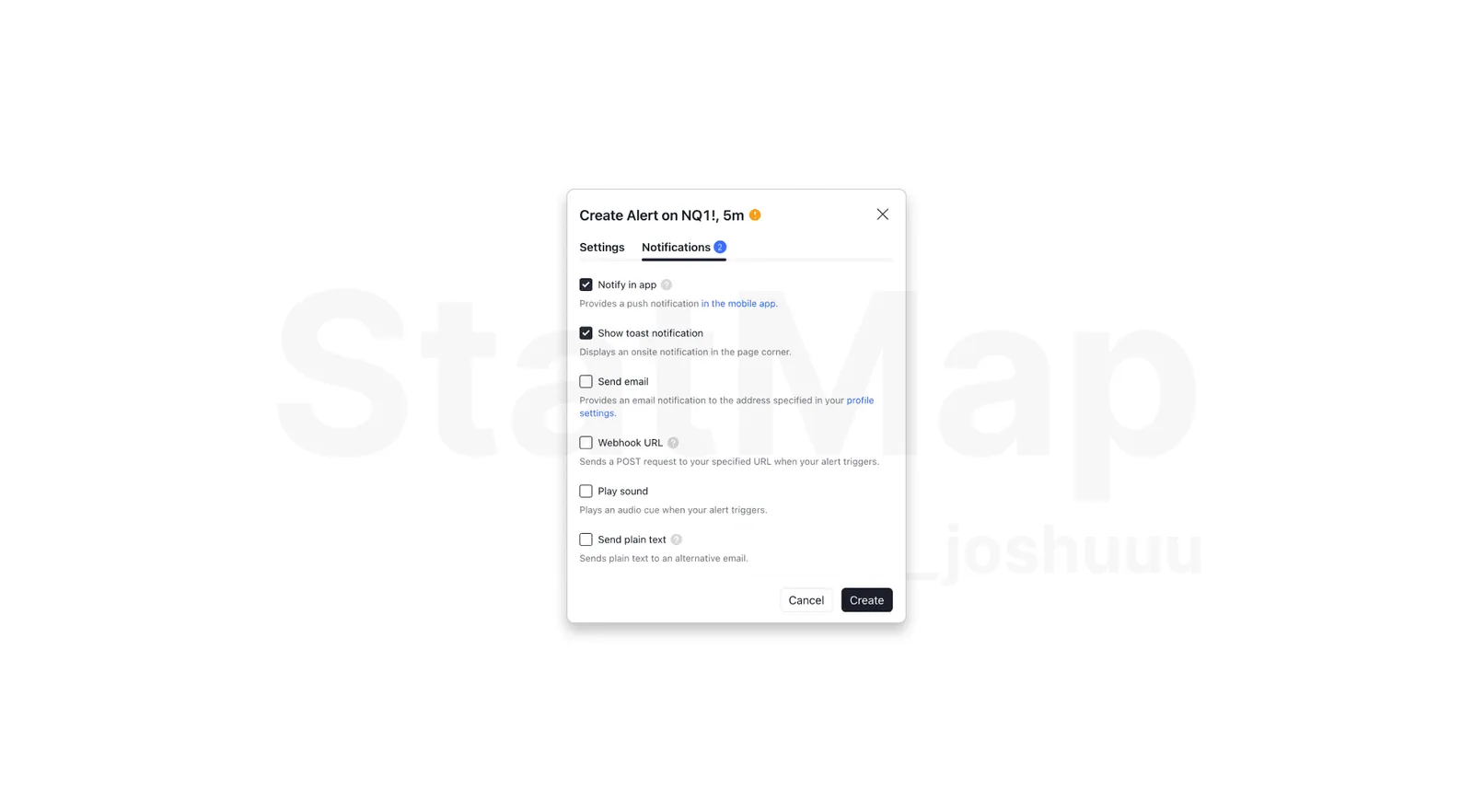
On the Notifications tab, you can choose between several different options.
The most common ones are:
Notify in app: Sends a push notification to the TradingView mobile app.
Show toast notification: Displays a popup on your chart.
Send email: Sends an alert to the email address in your profile.
Choose one or more notification types based on your preferences and trading workflow.
Manage alerts
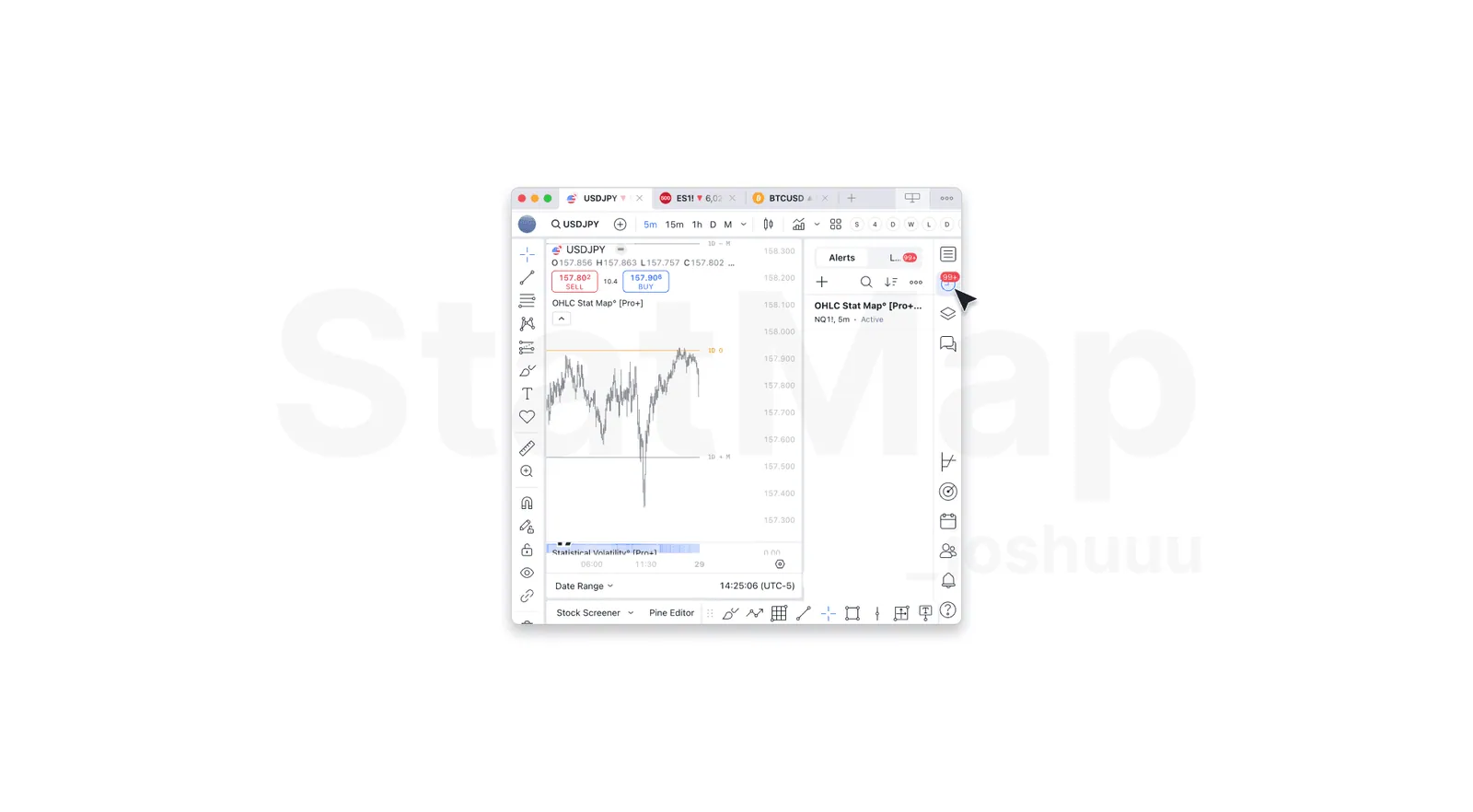
Click on the alarm clock icon on the right-hand side of your TradingView screen.
Use the Alert Logs to view past notifications.
Pause, resume, or delete alerts as needed to adapt to new strategies or market conditions.
This makes it easy to adjust your alerts based on market changes or new strategies, keeping your trading workflow efficient and up-to-date.
If you change the indicator settings later, for example by enabling another timeframe row, create the alert again so it uses the new settings. All indicator settings are listed in the StatMap° v4 Settings Reference.
Put it on your chart
Get Statistical Mapping° and Statistical Volatility° for TradingView, or ask StatMap AI about settings and setup.
Related articles
Getting Started: Claim Access, Add the Indicators, First Setup
Claim your TradingView access on Whop, add Statistical Mapping° and Statistical Volatility° to your chart, and set up a simple first configuration.
StatMap° v4 Settings Reference
Every setting of Statistical Mapping° and Statistical Volatility° v4 explained: calculation, timeframes, sessions, style, liquidity, graph pane and alerts.
StatMap° v4 Alerts: What You Can Alert On
Which events trigger alerts in Statistical Mapping° and Statistical Volatility° v4, what the messages look like and how to create the alert in TradingView.